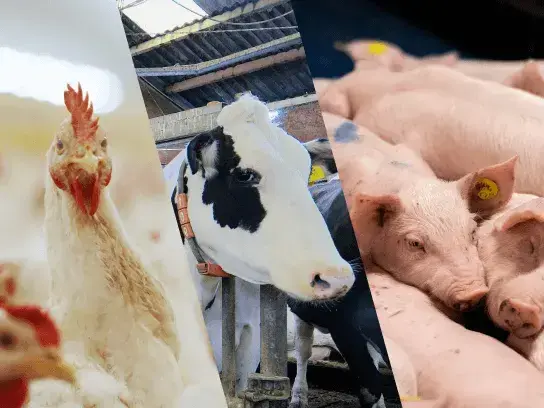
Why lighting matters Products & solutions 00
Animal lighting

Good animal lighting is adapted to suit the type of animal and how it is housed. This improves performance and reduces costs.  

Discover animal lighting
poultry

Poultry Lighting

Good poultry lighting improves performances and reduces costs.

Broilers Laying Hens Parent Stock Rearing Turkey
cattle

Cattle lighting

Optimal cattle lighting increases milk yields, growth and more.

Dairy cattle Veal calves Young cattle
pig

Pig lighting

High quality pig lighting improves performances and biosecurity.

HATO Aqua fish icon

Lighting for fish

Robust fish lighting supports fish health, growth and operational efficiency.

Sea cage lighting Land-based lighting
View all products
Insights 00 (1)
Success stories

Happy partners and farmers inspire us . We’re pleased to share their experiences with you.

Read the stories
Brightness for everyone

HATO Insights

Enrich your knowledge on animal lighting

Knowledge articles

Take a deepdive into specific topics

Webinars & training

Our brightness consultant at your service

Latest news

Stay up to date on all HATO related news

Events

Find HATO on the road

About us 00 (2)
Dutch Engineering & Production

All our products are engineered in the Netherlands. An increasing number is also produced here. 

Learn more
Get to know us

About us

World pioneer in animal lighting.

Our story

Your lighting partner since 1974

HATO Campaigns

Our active campaigns and future initiatives

Careers

Are you ready to add brightness to your career?

Contact
Partnership & Dealership

Join our worldwide network of valued partners & dealers

Discover more
Let's collaborate

Message us

We’re open to many forms of collaboration

English Dutch German Spanish French Polish Norwegian UV Lighting
Why lighting matters Products & solutions Products & solutions
Animal lighting

Good animal lighting is adapted to suit the type of animal and how it is housed. This improves performance and reduces costs.  

Discover animal lighting
poultry

Poultry Lighting

Good poultry lighting improves performances and reduces costs.

Broilers Laying Hens Parent Stock Rearing Turkey Learn more
cattle

Cattle lighting

Optimal cattle lighting increases milk yields, growth and more.

Dairy cattle Veal calves Young cattle Learn more
pig

Pig lighting

High quality pig lighting improves performances and biosecurity.

Learn more
HATO Aqua fish icon

Lighting for fish

Robust fish lighting supports fish health, growth and operational efficiency.

Sea cage lighting Land-based lighting Learn more
View all products
Insights Insights
Success stories

Happy partners and farmers inspire us . We’re pleased to share their experiences with you.

Read the stories
Brightness for everyone

HATO Insights

Enrich your knowledge on animal lighting

Knowledge articles

Take a deepdive into specific topics

Webinars & training

Our brightness consultant at your service

Latest news

Stay up to date on all HATO related news

Events

Find HATO on the road

About us About us
Dutch Engineering & Production

All our products are engineered in the Netherlands. An increasing number is also produced here. 

Learn more
Get to know us

About us

World pioneer in animal lighting.

Our story

Your lighting partner since 1974

HATO Campaigns

Our active campaigns and future initiatives

Careers

Are you ready to add brightness to your career?

Contact Contact
Partnership & Dealership

Join our worldwide network of valued partners & dealers

Discover more
Let's collaborate

Message us

We’re open to many forms of collaboration

English Dutch German Spanish French Polish Norwegian UV Lighting

Dynamic lighting for laying hen management: First findings from a semi-commercial study

Lighting has always been an important part of poultry management. But can it be used for more than simply providing enough light for hens to eat, drink, and lay eggs?

Within the OMELETTE project,
researchers investigated whether dynamic lighting could become an additional management tool for farmers keeping hens in aviary systems.

The study followed laying hens throughout an extended production cycle of 93 weeks. Different genotypes and aviary systems were evaluated under the semi-commercial conditions of Experimental Poultry Centre (EPC) in Geel, Belgium. The aim was not only to evaluate production performance, but also to better understand how lighting can be used to support flock management during long laying cycles.

The results showed that dynamic lighting did not consistently increase egg production, improve feed efficiency, or reduce mortality. Importantly, however, it also did not negatively affect flock performance. Hens performed well under both lighting approaches, demonstrating that dynamic lighting can be implemented without compromising productivity or welfare.

The most interesting findings were related to behaviour rather than production.

  • In several flock comparisons, dynamic lighting was associated with fewer eggs laid outside the nest and indications of improved egg classification.
  • Furthermore, brown hens tended to have lower body weights under dynamic lighting, despite similar feed intake and feed efficiency.
  • While further research is needed to confirm the underlying cause, this observation may reflect differences in activity levels and flock behaviour.

These results support the idea that lighting can be used as a management tool to influence how hens interact with their environment.

This study reinforces the idea that dynamic lighting should not be viewed as a production-enhancing technology, but as an additional management tool. Just as farmers use feed, climate, housing design, and daily observations to guide flock behaviour, lighting can provide another opportunity to influence activity patterns, nest use, and flock organisation.

The findings have already led to practical implementation. Based on the knowledge gained during the project, the dynamic lighting concept is currently being implemented on commercial laying hen farms, demonstrating how research results can be translated into practical flock management.

>